Monday, January 1, 2018

Review: Red Sonja: Unchained, Volume One

Red Sonja: Unchained, Volume One Red Sonja: Unchained, Volume One by Peter V. Brett
My rating: 5 of 5 stars

This is a solid 5-star review.

This is a stand-alone series about Robert E. Howard's Red Sonja. In this story. Sonja's trademark bikini chain mail is broken and needs to be repaired. In the interim, Sonja ends up wearing the blue fur pelt of a demon that she has killed.

This is a straightforward sword and sorcery tale that is an earnest homage to RE Howard and his characters. The artwork is top notch as is the writing. I learned about this book while attending an author event for Peter V. Brett. I had no idea that he has written it.

The writing, in particular, is noteworthy as it works on two levels. The primary story is well crafted. At the same time, there are undertones that the reader can enjoy if they are so inclined. One of those undertones has to do with Sonja being portrayed in sexy armor that would be pointless in a real sword fight. She was created to give largely male readers a little more flesh to look at.

The side observations on that issue acknowledge that we are living in the 21st century where women are more than eye candy while at the same time not being dismissive to readers that frankly enjoy the eye candy. It is a subtle and sophisticated treatment of that issue.

View all my reviews

Review: Injection, Vol. 2

Injection, Vol. 2 Injection, Vol. 2 by Warren Ellis
My rating: 5 of 5 stars

This is a solid 5-star review.

The saga of the Injection continues. The Injection is a sort of artificial intelligence that exists within computers but is able to manifest itself in the real world. The manifestations may be physical, spiritual, on this plane of existence or another, or some combination of all three.

Instead of following the characters from Injection #1 forward, we get to see the Injection operating in a different way as it continues to figure out how humanity functions.

Great art. Great writing. A series that is worth your time.

View all my reviews

Review: Too Like the Lightning

Too Like the Lightning Too Like the Lightning by Ada Palmer
My rating: 2 of 5 stars

This is a 2-star review.

I read this book as it was one of the 2017 Hugo best novel nominees.

I made it about a third of the way before a Dorothy Parker response was needed.

The book takes place in the future. Humanity has apparently cast off religion and overt sexuality. There are counselors that offer advice, but due to the current human convention, cannot discuss anything that smacks of religion.

In another development, people no longer align themselves with a national identity. Instead, there are 7 "Hives" that manage global affairs. One can live in one place, exhibit cultural traditions from a second place, and belong to a "Hive" that exists in no place in particular. On the one hand, this is an interesting concept that is modeled somewhat within our modern human conventions. How else does one explain religious groups such as the Mormons or Quakers?

People apparently change from hive to hive as their personal convention permits. The poorly defined government structure seeks to balance those population groups. One crisis in the book results from an action that will severely undermine the "popularity" of one of the Hives. Accordingly, the author appears to be relegating human decision making to the same level as deciding which movie star/media personality we support.

This infantilizing continues when a group of adults is chanting for one of the adults in charge of the government to buy them all some ice cream. Adults would dig into their own pocket and buy their own dairy confections rather than abase themselves before a supposed authority figure.

The book features air cars that can whisk a person halfway around the world in a very short amount of time. Unfortunately, I believe that the mathematics of speed, the physics of energy, and the economics of productivity help move the book from the science fiction category to being more properly fantasy.

The coupling of nearly infinite individual movement with the dissolution of borders creates an intriguing circumstance to discuss the utility of national identities. Breaking the laws of physics and economics so thoroughly undermines that discussion.

The characters apparently hew towards an androgynous exhibition of sexuality. This is highlighted by a scene where one woman who chooses to embrace and exhibit her female sexuality/sensuality. When another character is reluctant to agree to a course of action suggested by her husband, she quietly uses her sexuality to inspire agreement.

Humanity has several million years worth of evolution that includes sexuality and sexually based responses. That's a bunch of long words for saying that boys naturally want to please pretty girls.

Those sexual responses are part of why we have been so successful as a species. Denying that part of our evolution is, in effect, denying our existence.

All that being said, the single greatest sin of this book is that it flips from characters that were interesting over to other characters that are less than interesting. At the send, the book comes off as a high-minded college text book with a message of "sit down so I can teach you something".

A little digging indicated that the author is a college professor. Ironically, I spent some time reading her blog and found those entries to be interesting. I would probably enjoy taking a serious college course with this author. I have no interest in her fantasy writing.

View all my reviews

Review: The Dinosaur Lords

The Dinosaur Lords The Dinosaur Lords by Victor Milán
My rating: 2 of 5 stars

This book had all of the hooks that should have made it a great experience for me. It had knights...fighting while mounted on dinosaurs. It had the usual palace/court intrigue.

Early in the author reveals that it has an additional hook; people have to be killed twice before they are truly dead.

Yet the book demonstrated just how poorly it can fail to measure up to expectations. While I was expecting to read more about how knights and squires managed their dinosaur mounts, the dinos were just rolled out for the combat scenes. Then they were taken away with little interest in their care, feeding, breeding, selection, etc.

The book also trades in the sort of nonsense that suggests that a lithe character can compete with a more muscular character. In this case, the leading female protagonist imagines that she could be a knight riding a dinosaur alongside her paramour despite her being a demonstrably slender character. The knights are, as one would expect, described as being significantly larger and stronger by comparison. There is no way that she could reasonably expect to don a heavy set of armor and be able to move effectively.

On the flip side, the book does do a good job of presenting characters training and fighting effectively within their "weight class" regardless of gender.

The author, unfortunately, decided to include an unnecessary rape scene. The primary villain is well established as being evil by the time this occurs. Aside from demeaning the protagonist (the same one with visions of armor dancing in her head), the rape does nothing to alter the mechanics of the plot. The female protagonist is seized and imprisoned by the villain. She is accused of treason and expect to be found guilty and killed as a result. The rape does nothing to further diminish her in the eyes of the other characters and it does nothing to further motivate her to escape.

The author felt the need to name every location in the book twice; once in something similar to Spanish or Portuguese and once in English. This was mildly distracting. People that know enough of either Spanish or Portuguese will be able to infer the English translation. Those that do not, being fantasy readers already, will parse as they do elvish or orcish or Klingonee and move on.

At the end of the story, the need for a double death to kill a character was applied inconsistently. The entire phenomenon was largely left unexplored.

And finally, one region decided to go "socialist". This was presented as working reasonably well despite the extensive human history of socialism resulting in shortages. The one realistic aspect that the author got right was the noble that decided to abandon his title and let the region go socialist. The noble ends up being an influential member of the leadership committee for the community. One of the lower caste members observes that the change to socialism hasn't really altered his status. He did whatever the noble told him to do before the change and he does what the noble....and the rest of the committee...tells him to do after the change.

The author wades into the human sexuality arena. The characters display none of the common bonding tendencies that exist within the human condition.

View all my reviews

Wednesday, November 22, 2017

Review: The Reborn King

The Reborn King The Reborn King by Michael R. Miller
My rating: 1 of 5 stars

This is a 1-star review. I made it to chapter 3 before the ghost of Dorothy Parker rose from the pages. I rarely ever give 1-star reviews. Usually, the grammar and spelling have to be atrocious to warrant that sort of review. The grammar and spelling in this book are fine.

The characters and setting exuded an air of cardboard. Fortunately for the reader, this book does not feature any fire-breathing dragons. The resulting conflagration would have required the Herculean efforts of the entire firefighting staff of a minor metropolitan area to contain.

The characters were one dimensional and uninspiring. We start off with a villain being given some greater evil power. Why? Did they ask for the power? Were they on some sort of evil short list? Who knows. What does the greater evil power want? Again, who knows.

Then we get to the protagonists. The king of dragons is morose, defeatist, focused on his belief in an old religion. The king of humans is the only character to raise a modest amount of interest. He has lost one heir and seeks to protect his only surviving heir; a baby girl. The king of humans is in turns insufferably arrogant and incredibly spineless. The queen of the faeries is just.....there....barely.

The setting is sketched out in the barest of terms. The one feature this citadel has is that it includes a large number of objects made from a stone that looks like gold...or that has gold veins running through it. There are vague references to armor, arms, and other trophies of past wars. We have no idea what those wars are about or who the armor, arms and other trophies might be worth having. We really aren't given any idea what they look like, such is the generic description that is in play.

What drove me out of this book was the poor storytelling. Examples:

"I call this council of war to order. Scant as our numbers may be, we here are the leaders of the Three Races (humans, fairies, and dragons), and so our decisions cannot be contested"

This dialog is the king of the dragons speaking to the king of the humans, the queen of the fairies, and his son; the prince of dragons. There are a few servants, but this is essentially a private meeting. They all know that they are human, fairy, and dragon. So why the parenthetic clarification?

Later on, the dragon prince is running to save the baby princess. The forces of evil are battering down the gates and seizing the citadel. The princess' guard promptly begins to carry her down to the ship that awaits her at the port. It is so urgent that they get her out of there that they carry her in a crib that is so large that it requires 6 full grown men. If it is so urgent that she get to the ship, then why not just carry her without the crib?

The dragon prince eventually carries the princess in his arms in an attempt to get her to safety.

From the book - "As the door caved in, he fell with it, and saw a flash of black ripple past his face. His right cheek flared in pain as the arrow sliced through the top layers of his skin."

Wouldn't it be more direct to just say that an arrow grazed his cheek?

Moments later the dragon prince is attempting to bodily ram through a door while carrying the princess in his arms. The door, being magically sealed, rebuffs his attempt and he lands on the floor. His armor is dented badly enough that it now pierces his skin. Despite the obvious violence of the impact, the princess is unharmed.

Children playing with GI Joe action figures have more believable adventures.

View all my reviews

Sunday, November 19, 2017

Review: Hell Divers by Nicholas Sansbury Smith

Hell Divers Hell Divers by Nicholas Sansbury Smith
My rating: 2 of 5 stars

This is a 2 star "did not finish" review.

The hook for this book is that the world has been destroyed and the only pockets of humanity left alive are on airships. The airships send out skydivers....well Hell Divers (roll credits)....to scavenge for equipment/parts that are in short supply.

Part of the ability to suspend disbelief is the fact that there are other believable elements to the story. By chapter 5 I had more than enough plot holes that could not be filled except by just accepting that this was just a story.

A reader that just wants a cool read might well enjoy this book. The writing/grammar is fundamentally good. It's just that the plot holes drove me out of it early and often.

- So the promotional reading indicated multiple airships. There are two, so the plural is accurate....barely.

- Everything is in short supply on these airships. Yet the hell divers are ready to knife their way out of their parachute harnesses. Also, they don't spend much time recovering the useful gear of a diver that dies on the way down.

- Nuclear fuel is heavy. Nuclear fuels are very dense. They pack a lot of energy into very little space. But it still requires tons of the stuff to power a reactor that can power a city. One hell diver finds a "case" of nuclear fuel cells that weighs 40 lbs. This is supposed to be enough to power the airship for years if not decades. There isn't enough energy in 40 lbs of nuclear fuel to do that.

- Nuclear fuel is radioactive. Yet the hell diver opens the case to see what is inside.

- Again, things are in short supply. But when the hell diver returns to the airship via a balloon inflated using helium, they just let the helium escape.

- And the hell diver "steers" the balloon into the open bay of the airship by pulling ropes/lines like they were steering a parachute or a kite.

- Early on it is established that none of the hell divers has seen any significant signs of surviving down on the polluted/radioactive surface of the world. Yet the two teams that go down instantly run across semi-humanoid lifeforms.

- The divers have binoculars. Things that should have existed before the world was destroyed. Binoculars are normally used close to the eyes to get the focal length right. Yet the divers wear masked helmets. The shouldn't be able to use the binoculars effectively.

- The divers wear helmets and suits that seem to be uniquely well suited for jumping into a poisoned and radioactive environment. Yet it is established that no one knows who started the war that ended the world. Why would those suits exist on those airships before the world ended? How could they have been manufactured on an airship suffering from scarce resources after the world ended?

There were just too many plot holes for me to bother reading any further.

View all my reviews

Wednesday, October 11, 2017

Review: The Red Knight

The Red Knight The Red Knight by Miles Cameron
My rating: 5 of 5 stars

This is a 5-star review. There were a couple of minor issues with the book, but overall this is exactly what great fantasy fiction looks like.

On one level this is a straight-out swords and sorcery tale. One of the fae has created an incursion into the lands conquered by humanity. His objective is to retake a fortress that is home to a source of magic that is valuable to the fae.

A band of mercenary knights hire themselves out to the abbey that is housed in the fortress. They are led by a bastard son who is young for such a position. He leads this elite group of warriors on the field. He is also in the process of developing the skills needed to use magic.

The nuns of the abbey have rather unusual habits that end up being used to help heal those that are wounded defending the fortress/abbey from the fae siege.

The world suggests that it could be a version of the earth after some sort of cataclysm has wiped out modern technology and replaced it with magic. The religion in the world bears many of the forms of Catholic Christianity; including an opposition/revulsion of the use of magic. It is church teaching about children born out of wedlock that lead the young knight into a mercenary life.

And yet he and his group end up defending a church abbey.

Beneath this straightforward story is an examination of the difficulties of living in a world that uses social/cultural conventions to create a uniform populace. How can a person survive when their very existence is condemned by "the church"? How can a person actively foster a faith that teaches that they are damned?

This is a tremendous start to what I hope will be a fantastic fantasy series.

There are two nits to pick with this book. The grammar editing of the book was quite poor. Fortunately, the story is good enough to pull me right back in after encountering a plethora of easily identified errors.

The second is that the there are times when the book reads like the author just purchased a second-hand copy "Medieval Armor Illustrated". As it turns out, the author's other interest include medieval combat; including armor, natch! It wasn't a huge issue, but there were times when the examination/description of the armor worn by various knights got a little repetitive.

View all my reviews

A brief afterwords:

I was pleasantly surprised to learn that Miles Cameron is a fellow United States Marine.  His love of martial experiences definitely comes through in his work.  Now I am looking forward to the next installment of this series even more.

After the afterwords:

Per his profile on Goodreads,  Miles was actually a Naval officer and suffered under the tutelage of firm Marine Corps hands in OCS.  I had misread a common on one of his blogs to mean that he was a Marine.  He's still a vet and still writes great fantasy.

Tuesday, October 10, 2017

Review: The Watchmaker: A Sweet Contemporary Time Travel Romance

The Watchmaker: A Sweet Contemporary Time Travel Romance The Watchmaker: A Sweet Contemporary Time Travel Romance by Anna Erishkigal
My rating: 2 of 5 stars

A 2-star review.

This is a sort of romance dressed up as a time travel tale that uses a watch as the McGuffin to get things moving.

The story consists largely of the main character thinking about how they could change the past while running through the city.

After the watchkeeper tells her how she cannot change the past, she ends up violating his rules. He explains how at the least, such an attempt will result in the same outcome, or at the worst a freezing her in a time loop. Despite the warnings about the negative consequences, there are no negative consequences after she changes the past.

Read it for the romantic aspect. Not very good as fantasy.

View all my reviews

Review: First Keeper - A Landkist Short Story

First Keeper - A Landkist Short Story First Keeper - A Landkist Short Story by Steven Kelliher
My rating: 1 of 5 stars

A 1-star review. And a DNF.

While the world building had some promise, the plot consisted largely of children sitting around a fire while an adult evaluated their magical colors. Lots of description from within the heads of the characters and not much action or character development.

View all my reviews

Supporting Creators

I enjoy podcasts.  This is not exactly earth-shattering news for regular readers of this space.  All 2.37 of you.

And I try to support content creators whenever possible.  To that end, I participate in Patreon to help support several podcasts.  To keep my budget under control, I limit my Patreon participation to $10 per month.  As of right now, this is how my contributions break down.

  • Tea and Jeopardy - $3/month.  Used to be $4, but I had a recent addition that I enjoy just about as much.  This is a Hugo award-winning podcast that is well worth your time.
  • The Project Entertainment Network - $3/month.  Again, it used to be $4, but...changes...they happen.  I am a big fan of The Horror Show with Brian Keene.   I haven't been attracted to the rest of their offerings. 
  • The Grim Tidings Podcast - $3/month.  This is that recent addition.  They just started their Patreon campaign.  As the name suggests, Rob and Philip focus on the Grimdark sub-genre.  This engaging duo that asks interesting questions.  And they have the best sound effects! 
  • The Once and Future Podcast - $1/month.  Down from $2.  It is a decent podcast, but my enthusiasm for it is waning.


People that create content may do it as a labor of love, but they also have expenses.  Support their advertisers when you can.  And hitting the tip jar every once in a while is also a good idea.

Monday, October 2, 2017

Review: Shift

Shift Shift by Hugh Howey
My rating: 2 of 5 stars

This is a well-deserved 2-star review.

After the fantastic experience in reading Wool, this book was a notable disappointment.

In Wool, we learned of a world where everyone lived in silos that ran hundreds of stories deep. There was strict control of information and reproduction. And occasionally, people got fed up and took a walk out in an outside world so dangerous that the air itself was a confluence of corrosion and lethality.

At the end of that book, we learn that the decision to live in these silos was not in response to something that was done to us. It was the plan of action knowing what we would do to others.

Shift presents what we did. And it represents a thoroughly unbelievable belief about how the U.S. government functions. A single US senator creates funding for the design and construction of the silos. He sets of a program to evaluate and select those who would be "saved". He uses a pair of US Congressmen to do the design and construction management.

The US President isn't saved. The cabinet isn't saved. The only people that get saved are this senator and those he has selected. The US government simply doesn't work this way.

The book also indicates a lack of knowledge about geology and civil engineering. The location for each silo is excavated before the silo sections are placed. A void is left around the silos to allow remote detonation and destruction. The laws of physics and limitations of geology mean that this sort of construction methodology isn't possible. Structures of that size must be placed on deep piles to support the load. Deep excavations are subject to collapse of the pit walls.

As a last (but not final) criticism, the premise of having a multi-state political convention be the reason to drive people into the silos creates some further issues. The silos are portrayed as having spaces extending from the central hub for farming, manufacturing, etc. The silo residents are also described as largely having no idea that there are other silos in the world. Most of the residents think they are alone in the world. As vibrations will travel a long distance below ground (and a really far distance in stone/tightly compacted earth) the silos would have to be positioned miles from each other to prevent such vibration transmission.

Yet the campaign event that drives everyone into the silos suggests that each silo opening is close enough to the others to permit people to hear the activities at each adjacent location. It is also a short walk from one silo to the next. If the silos were that close together, then the residents in each silo would have easily heard activities in adjacent silos.

The one brief moment of respite in the book was when the political party responsible for this mess is revealed. I laughed.

Read Wool. Enjoy it. Skip the rest of the series.

View all my reviews

Review: Waiting Out Winter

Waiting Out Winter Waiting Out Winter by Kelli Owen
My rating: 3 of 5 stars

A 3-star review. Really more of a 2.5-star review.

Thought this was going to be a suspense/horror book. Not really a lot of either involved. Perhaps that explains my response as I was expecting this to involve some level of horror that simply was not there.

A fairly pedestrian "something bad happens and some people survive" storyline. The characters were not terribly engaging.

View all my reviews

Friday, September 29, 2017

Review: Fae: The Wild Hunt

Fae: The Wild Hunt Fae: The Wild Hunt by Graham Austin-King
My rating: 3 of 5 stars

This is a 3-star review. Really more of a 2.5-star review.

The world building is interesting. The characters also have a lot of potential.

But this is not a complete story. It is the opening to a good story. It appears to be the beginning of a multi-book saga. The book sets up plenty of conflicts, but it resolves none of them.

As a secondary nitpick, one of the societies involved has a significant physical barrier to keep outsiders from attacking them and maintains a capable and highly competent sailing fleet. When faced with the prospect of being an over-populated nation of islands, how do they respond?

By becoming traders? By becoming a place where wealth can be safely deposited?

Nope. They turn into bloodthirsty pirates abroad who have respect for hard work and private industry at home. Erg.

This book could have been so much more, but it ended up being so much less.

View all my reviews

Thursday, September 28, 2017

Review: Black City Saint

Black City Saint Black City Saint by Richard A. Knaak
My rating: 2 of 5 stars

This is a 2-star review.

While I have enjoyed some of the author's books in the Dragonlance series, this book was quite disappointing.

Most of the characters were pretty two-dimensional. The female lead character was the most frustrating as she had no existential motivation. She loved the male lead character because she loved him.

The plot was pretty straight-forward; mostly a hard-boiled detective does some detecting-with-magic-thrown-in. The setting (roaring 20s Chicago) was uninteresting.

The only redeeming character in the book was the dragon.

View all my reviews

Tuesday, September 26, 2017

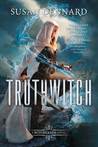
Review: Truthwitch

Truthwitch Truthwitch by Susan Dennard
My rating: 4 of 5 stars

This is a solid 4-star review.

I am not in the target audience for this book. The story revolves around two teen girls developing their magical powers into something greater than themselves. It is a story of two girls that share a strong bond of friendship. And it is a story that involves a moderate amount of romance. I'm really not in the target audience.

I loved this book.

The girls were smart and determined. The world building was meticulous. The variety of magic available offered so many intriguing options for the story. It was largely a well-told story.

There were a couple of areas where it fell a little short.

(view spoiler)

Switch your brain into a slightly lower gear and then enjoy the fantastic story offered in this book.

View all my reviews

Review: Death's End

Death's End Death's End by Liu Cixin
My rating: 2 of 5 stars

This is a 2-star review for a book that I did not finish.

The one character that I cared about early on dies early on. What is left is a female character that does as she is told and a male character that is the epitome of a cardboard cut-out, mustache-twirling villain.

The plot early on involves a plan to send a very small spaceship towards an attacking force. To be of any use, the ship must be light with a light payload. They use a solar sail and a series of precisely time nuclear bursts as propulsion.

Not only is this a version of propulsion first envisioned by Vernor Vinge roughly over 30 years ago, it ends up failing.

Which is where I closed the book and went on to something better.

View all my reviews

Tuesday, September 19, 2017

Review: Legionnaire

Legionnaire Legionnaire by Jason Anspach
My rating: 3 of 5 stars

This is a 3 star review.

I originally bought this book because Nick Cole is a co-author. I've read a few of his other books and think he has some potential.

Legionnaire was a half step backwards. The first 2/3s of the book is a straightforward MILsf adventure. Fun to read. Several engaging characters. A relatable plot.

But there isn't any purpose to the adventure. We join the story in mid-plot. Our heroes are on a mission to meet leaders on an alien planet to obtain support for the planet's "senator" in the galactic assembly. And they get attacked.

Everything that follows is a series of errors resulting from overconfident officers and an ill-informed military. Read the story as it is worth the trip.

The book really slows down during the last 1/3rd of the book as the authors cram in a separate MILsf adventure story that illuminates one of the better officers from the first section. But it doesn't really do much to further the primary plot. The entire thing sort of dwindles down to nothing by the last page.

View all my reviews

Review: All Good Things

All Good Things All Good Things by Emma Newman
My rating: 4 of 5 stars

This is a solid 4-star review.

The concluding book in the series was a very good conclusion that almost stuck the landing. While I thoroughly enjoyed the rest of the series, the conclusion really failed to fill out the rest of the world building. In fact, it sort of undermined it.

Early in the series, we were treated to a comparison between late 19th century-ish England and a modern 21st-century world. The 19th-century version is dominated by fae and magic that maintains a rigid social order that is controlled by men. Our protagonist is a young woman who ran away to the parallel world is supposed to be non-magical and it largely is. It has also benefitted from the progress of over a century's worth of social advances.

As the tale unfolds, we have humans, the fae, sorcerers, and an elemental court with interests that are in turns competing and parallel. By the end, our young protagonist has successfully turned these groups and the world upside down. Sort of like a female version Captain Kirk that destroys social conventions and then sails away to leave the upended society to sort things out for themselves.

The entire series is both fun and thought provoking.

The last book barely misses as the entire creation of these split interests....or worlds to reference the title....is blamed on "the patriarchy". There is no explanation of why "the patriarchy" established the 19th-century magical society. There is no exploration of any potential advantages to that arrangement.

It's a modest bit of niggling, but it took a bit away from the final book to have one of the central themes of the series remain unexamined in the ultimate entry.

View all my reviews

Thursday, September 7, 2017

Review: The Art of Racing in the Rain

The Art of Racing in the Rain The Art of Racing in the Rain by Garth Stein
My rating: 4 of 5 stars

An interesting book about a budding race car driver, his wife, their daughter, their dog, and how racing can be a metaphor for how one lives their life.

Some of the plot points were resolved a little too conveniently. Also, the use of the dog as the narrator is occasionally circumvented about allowing the narrator to know/think/feel based on events that should have been beyond the dog's ability to experience. There are many events that occur in places where dogs are not welcome but are later conveyed as discussions about those events that take place after the events occur. It seems like a bit of a cheat on the use of the dog as the narrator as a storytelling tool.

If you dislike cars and/or car racing, then this probably is not a good book for you. The author uses a lot of racing techniques as metaphors for dealing with challenges in life.

View all my reviews

Review: The Lost

The Lost The Lost by Sarah Beth Durst
My rating: 5 of 5 stars


View all my reviews