Michael Mann is a well known scientist for folks following the science behind climate change policies. He is lauded by people that endorse rigorous government responses to curb carbon dioxide emissions. He is held in somewhat lower esteem by people that are skeptical on the issue.
I would fall into that latter group, FWIW.
However, I remain committed to giving credit where credit is due.
In 2015, NOAA "updated" their temperature records and insisted that there had been no "pause" in the increasing temperatures of the planet. Two of the many reasons for my skepticism are the regular fiddling with the temperature records that go on from time to time and the documented pause in global warming that began in 1998.
While there are many legitimate reasons to adjust the recorded temperature data (i.e. change in recording equipment/location, etc.) it seems that there have been other adjustments to the record that are less legitimate. In this case, the NOAA "update" was timed to coincide with the Paris climate conference. Such a coincidence inspires the suspicion that this particular adjustment was done to provide a media opportunity in support of additional carbon restrictions.
There have been other examples of "adjustments" that are questionable as well. For example, there were questionable changes made to 20th century data collected from long term sites in Australia.
As I know someone will misconstrue this, let me reiterate: there are many legitimate reasons for adjusting the temperature record. And those legitimate adjustments can and will push the recorded data higher.
The pause in global warming is important because it was not predicted by the many models used by scientists to evaluate the impact of carbon dioxide on our environment. Skeptics, like me, point to that oversight and respectfully suggest that the models may not accurately reflect the actual functioning of the environment.
Do you know who happens to agree with me? Michael Mann and a host of other scientists that have published a letter in Nature Climate Change. This summary by Scientific American is also helpful.
Now I think it is fair to say that Mr. Mann still believes that anthropogenic CO2 is a significant problem that is worthy of immediate government action.
My perspective on government action is a bit complex. I think there are things we could do to reduce CO2 emissions that would benefit humanity even if science inevitably discovers that the climate isn't very susceptible to those emissions. Things like promoting power via nuclear fission, nuclear fusion, and various biofuels come to mind. I think there are things that we could do that would devastate humanity such as the various carbon tax proposals.
However, I also believe in giving credit where it is due. In this case, Mr. Mann participated in countering a flawed process and insisted on doing the hard scientific work to make the models accurately reflect our world. Getting it right matters. On that subject, I agree with Michael Mann.
Wednesday, March 23, 2016

Monday, March 21, 2016
Proving A Negative Is A Tough Task
Those following the Hugo Awards serial kerfuffles know that the whole mess really got started after Larry Correia was nominated for the Campbell back in 2011. Mr. Correia reported that he had read message boards and other sources where his nomination was received with something well short of warmth much less thoughtful consideration.
Mr. Correia has told a couple different versions about what was said. The earliest version that I found was here.
Now I have not found that quote verbatim elsewhere that was not citing Mr. Correia's post above. Nor have I found the other version where the critic opined that a Correia win would "end writing forever" that did not lead back something other than a Correia re-telling.
I'm adding this entry to my blog as a personal reference. There are people that deny that this episode ever occurred because they cannot find the source posting/message board/smoke signal.
Those folks are setting themselves up for a tough task; proving a negative. Mr. Correia is not obligated to provide a verbatim quote. I suspect that he is providing a translation of the events where someone made a more polite-ish statement that suggested that the Correia nomination was not in keeping with high literary standards/traditions/etc.
The inability to locate an exact citation is not proof that the episode did not occur.
And his nomination for the Campbell award was entirely appropriate and in keeping with the origins and traditions of the genre. Perhaps if the folks that are so agitated about what happened post-2011 Hugos had been a little more concerned about the snobbery going on that year, we might have been able to avoid all of the current conflict.
Mr. Correia has told a couple different versions about what was said. The earliest version that I found was here.
I am the least favored to win by the literary critical types, (in fact, I’ve seen a few places where they have ranked me #6 out of the 5 finalists) but that’s cool, because I am the only author eligible that has had a gnome fight or trailer park elves. (or as one critic pointed out, I am a relentlessly single tone throw back, and another said that if I win it is an insult and a black mark on the entire field of writing.) SWEET! I’m so unabashadly pulpy and just happy to entertain, and thus offensive, that I make the inteligensia weep bitter blood tears of rage.Emphasis added.
Now I have not found that quote verbatim elsewhere that was not citing Mr. Correia's post above. Nor have I found the other version where the critic opined that a Correia win would "end writing forever" that did not lead back something other than a Correia re-telling.
I'm adding this entry to my blog as a personal reference. There are people that deny that this episode ever occurred because they cannot find the source posting/message board/smoke signal.
Those folks are setting themselves up for a tough task; proving a negative. Mr. Correia is not obligated to provide a verbatim quote. I suspect that he is providing a translation of the events where someone made a more polite-ish statement that suggested that the Correia nomination was not in keeping with high literary standards/traditions/etc.
The inability to locate an exact citation is not proof that the episode did not occur.
And his nomination for the Campbell award was entirely appropriate and in keeping with the origins and traditions of the genre. Perhaps if the folks that are so agitated about what happened post-2011 Hugos had been a little more concerned about the snobbery going on that year, we might have been able to avoid all of the current conflict.
Saturday, March 19, 2016
I Have Already Read Something Better
The bickering in the SFF community exists for a couple of reasons. As far cooler heads than mine have observed, the field has gotten so large that no one person can truly survey all of the published works in order to have an informed opinion. Therefore there will always be works that are overlooked.
Given that the Hugo Awards acknowledge five finalists and one winner each year, it is entirely predictable that high quality work will pass under the radar of enough voters to end up being left without acknowledgement. Specifically, the rest of this entry will reference the Best Novel category.
In looking back over the list of nominees and winners, I find 1986 to be a turning point. Prior to that year, I had found most of the nominated works that I encountered to be quite enjoyable. Some had a serious message. Some were just plain fun pieces of fiction. But they almost uniformly provided an enjoyable reading experience. I have not read all of them, but I have read a high percentage of them.
1986 was the year that Orson Scott Card won the Hugo novel award for "Ender's Game". I got around to reading "Ender's Game" a few years back after the movie came out. I ignored the movie. And quite frankly I found the book to be less than impressive. The storyline dragged at times and the prose wasn't all that great. It was not a bad experience. It just was not an experience that I would put at the same level as the great SFF works from the preceding years and decades.
Considering the explosion in SFF works published each year, it is not unreasonable to find that my chanced experiences with Hugo nominated works have declined over the years. Now that I have spent a couple of years paying closer attention to the theoretically superior books that are nominated for the Hugo awards, I have sought out more of those works. Quite frankly, my response is that while they are largely enjoyable works, I have already read something better.
Going back a few years, I think about David Weber and his "Hammer's Slammers" series. I also think about Margaret Weiss and Tracy Hickman's work on the Dragonlance series. From that series comes one of my top ten books "The Legend of Huma" by Richard Knaack. Dave Duncan and L.E. Modesitt Jr. are also authors of interest that have not had any Hugo nominations.
Jumping into the 1990s, Mercedes Lackey, Sara Douglass, Barbara Hambly and Melanie Rawn are a quintet of ladies that produced a wealth of fiction that I devoured. Yet none of them have received Hugo Award nominations.
Terry Goodkind, Tad Williams, and R.A. Salvatore....the list could go on and on and on.
Someone could almost write a book listing authors of quality SFF works that have not been able to make it into the final round of the Hugo Awards.
Does this mean that the authors that did make into the final round produced bad work? Nope. Nor does it mean that the works that did make into the final round were in some way objectively "the best" of those years. The pool of voters has been small enough that it may not accurately reflect what readers of SFF fiction truly feel are the best works in the field.
As I encounter more nominated works from the last 10-15 years, I find myself more and more frequently arriving at the conclusion that "I have already read something better". What would be better than some of those works? What other books have provided me with a better reading experience than the nominated works that I have read?
Here is a quick, short list of authors and series that have done a great job of scratching my particular SFF itch. I have included the name of the first book in the series where possible. Some of these works include a diverse range of characters. Some do not. Some have commentary on our modern world. Some do not. All of them provide a unique approach to storytelling.
E.E. Knight - Age of Fire Series
Peter V. Brett - The Demon Cycle (5 books) - Book 1 - The Warded Man
Justin Cronin - vampire trilogy (3 books - natch) Book 1 - The Passage
Sebastien de Castell - Greatcoats (4 books) Book 1 - Traitor's Blade (made me weep man tears - thisone was series is great)
James A. Moore - Seven Forges (4 books thus far) Book 1 - Seven Forges
Joe Abercrombie - The First Law (3 books) - The Blade Itself
Hugh Howey - The Wool Series - Wool - Stop after the first book.******
Sarah Beth Durst - The Lost - I've only read the first book and can't vouch for the series. The first book was great!*** [The second book was declined by the publisher. I'm sad.]
Emma Newman - Split World Series (5 Books) - Between Two Thorns*****
Frank Cho - Skybourrne (graphic novel) [6*]
Peter V. Brett - Red Sonja: Unchained (graphic novel) [6*]
Alec Hutson - The Crimson Queen [6*]
Myke Cole - The Armored Saint [6*]
If you have not heard of these authors or these works, then perhaps you ought to read more widely. I promise that you will not waste your time with any of these works.
**edited/cleaned up on 3/21/2016
***added a book on 5/11/2016
****added another book on 5/13/2016
*****added another series on 8/8/2016
******added comment on 11/10/2016. Reviews forthcoming.
[6*] added on 1/11/2019
Given that the Hugo Awards acknowledge five finalists and one winner each year, it is entirely predictable that high quality work will pass under the radar of enough voters to end up being left without acknowledgement. Specifically, the rest of this entry will reference the Best Novel category.
In looking back over the list of nominees and winners, I find 1986 to be a turning point. Prior to that year, I had found most of the nominated works that I encountered to be quite enjoyable. Some had a serious message. Some were just plain fun pieces of fiction. But they almost uniformly provided an enjoyable reading experience. I have not read all of them, but I have read a high percentage of them.
1986 was the year that Orson Scott Card won the Hugo novel award for "Ender's Game". I got around to reading "Ender's Game" a few years back after the movie came out. I ignored the movie. And quite frankly I found the book to be less than impressive. The storyline dragged at times and the prose wasn't all that great. It was not a bad experience. It just was not an experience that I would put at the same level as the great SFF works from the preceding years and decades.
Considering the explosion in SFF works published each year, it is not unreasonable to find that my chanced experiences with Hugo nominated works have declined over the years. Now that I have spent a couple of years paying closer attention to the theoretically superior books that are nominated for the Hugo awards, I have sought out more of those works. Quite frankly, my response is that while they are largely enjoyable works, I have already read something better.
Going back a few years, I think about David Weber and his "Hammer's Slammers" series. I also think about Margaret Weiss and Tracy Hickman's work on the Dragonlance series. From that series comes one of my top ten books "The Legend of Huma" by Richard Knaack. Dave Duncan and L.E. Modesitt Jr. are also authors of interest that have not had any Hugo nominations.
Jumping into the 1990s, Mercedes Lackey, Sara Douglass, Barbara Hambly and Melanie Rawn are a quintet of ladies that produced a wealth of fiction that I devoured. Yet none of them have received Hugo Award nominations.
Terry Goodkind, Tad Williams, and R.A. Salvatore....the list could go on and on and on.
Someone could almost write a book listing authors of quality SFF works that have not been able to make it into the final round of the Hugo Awards.
Does this mean that the authors that did make into the final round produced bad work? Nope. Nor does it mean that the works that did make into the final round were in some way objectively "the best" of those years. The pool of voters has been small enough that it may not accurately reflect what readers of SFF fiction truly feel are the best works in the field.
As I encounter more nominated works from the last 10-15 years, I find myself more and more frequently arriving at the conclusion that "I have already read something better". What would be better than some of those works? What other books have provided me with a better reading experience than the nominated works that I have read?
Here is a quick, short list of authors and series that have done a great job of scratching my particular SFF itch. I have included the name of the first book in the series where possible. Some of these works include a diverse range of characters. Some do not. Some have commentary on our modern world. Some do not. All of them provide a unique approach to storytelling.
E.E. Knight - Age of Fire Series
Peter V. Brett - The Demon Cycle (5 books) - Book 1 - The Warded Man
Justin Cronin - vampire trilogy (3 books - natch) Book 1 - The Passage
Sebastien de Castell - Greatcoats (4 books) Book 1 - Traitor's Blade (made me weep man tears - this
James A. Moore - Seven Forges (4 books thus far) Book 1 - Seven Forges
Joe Abercrombie - The First Law (3 books) - The Blade Itself
Hugh Howey - The Wool Series - Wool - Stop after the first book.******
Sarah Beth Durst - The Lost - I've only read the first book and can't vouch for the series. The first book was great!*** [The second book was declined by the publisher. I'm sad.]
Emma Newman - Split World Series (5 Books) - Between Two Thorns*****
Frank Cho - Skybourrne (graphic novel) [6*]
Peter V. Brett - Red Sonja: Unchained (graphic novel) [6*]
Alec Hutson - The Crimson Queen [6*]
Myke Cole - The Armored Saint [6*]
If you have not heard of these authors or these works, then perhaps you ought to read more widely. I promise that you will not waste your time with any of these works.
**edited/cleaned up on 3/21/2016
***added a book on 5/11/2016
****added another book on 5/13/2016
*****added another series on 8/8/2016
******added comment on 11/10/2016. Reviews forthcoming.
[6*] added on 1/11/2019
Thursday, March 17, 2016
The Literary Hammer/Shield
People aware of the Sad Puppies imbroglio within the SFF community should be aware that a large part of that issue centers around a diverse range of opinions as to what constitutes the "best" writing within the genre. That such a range of opinion exists is a testament to the success of SFF authors in publishing a large volume of works that cover a broad spectrum of perspectives.
There are scientifically rigorous treatments that project current technological trends on the future. There are less rigorous treatments that attempt to look at current social issues. There are books from the fantasy end of the genre that toss science to the wind. There are books from across the spectrum that are just plain fun to read.
The history of the SFF genre embraces (or should embrace) all of those various modes of expression. What has developed within the genre is a condition where it is impossible for one person, or even a few people, to be sufficiently well read to be able to select the very best works and have that selection be meaningful for the entire genre.
The history of the written word includes a centuries long debate as to what is "literary". That word has long become something between a cudgel and a shield used to exclude certain works/authors from serious consideration.
My first contact with the word "literary" goes way back to high school. I had just discovered this new author; Stephen King. When attempting to engage a teacher on the subject, I was met with the attitude that Mr. King's work would never be worthy of serious consideration. His work simply wasn't literary.
It is my understanding that Mr. King has published a couple of successful books and had his work converted into a couple of decent movies/TV shows since that time. I hear that he doesn't have to worry about starving.
I had similar experiences throughout my education. In particular, my preference for SFF was routinely and nonchalantly dismissed as an interest in something that wasn't "literary".
Due to those experiences, I find it terribly difficult to take someone seriously when they attempt to use the word "literary" as a weapon-cum-shield to stave off the works of authors and/or publishing houses. Instead of providing the critical reasoning in support of their position, they declare that a work isn't "literary" and move on.
There should not be a place in a genre that was born out of popular pulp novels and magazines for excluding popular works. There is nothing wrong with valuing an enjoyable reading experience at least as much as other aspects of the genre. At the very least, there is nothing wrong with readers supporting works that they have enjoyed reading for awards that are presented due to reader participation. Being popular should not disqualify a work from consideration.
Tuesday, February 2, 2016
Hard Luck Hank: Screw the Galaxy - A Goodreads Review
 Screw The Galaxy by Steven Campbell
My rating: 2 of 5 stars
2 star review. In book it was a book that wasn't all that good. I did finish the book.
The protagonist is a Mary Sue from beginning to end. Falls repeatedly into piles of excrement and comes out smelling of daffodils.
View all my reviews
Monday, January 18, 2016
Star Wars: The Force Awakens - A Review
So I finally made it to see Star Wars: The Force Awakens. My initial take: at least it wasn't another Phantom Menace. I enjoyed the movie. It was entertaining. But it just didn't have the pop of the original movies of the 70s and 80s.
Most of my major criticisms can be covered by reading this thread over at John Scalzi's "Whatever" blog. Probably the most significant item is that I saw this movie already. In 1977. It was called Star Wars: A New Hope. The plot points for the new movie were pretty much the same as the first movie.
There were a couple of additional elements that were of mild concern.
One was the new main character, Rey. Rey was sold into slavery** at a young age. She worked collecting scrap for a salvage yard.
And yet without any obvious reason, she is a master mechanic, a skilled interstellar navigator/pilot, and outstanding at fighting with a light saber. For reasons unknown, she can also outfight multiple male opponents that out weigh her by a large margin.
The character Rey wanders dangerously close to Mary Sue territory.
As a contrast, Anakin was shown to repair speeders for several scenes before he was asked to drive one. It wasn't exactly a big jump for him to fly a speeder well.
Also as a contrast, consider how firmly Han Solo slapped down Luke when he suggested that he could fly a spaceship without any training or experience. And consider how much time that Luke put in learning to use a light saber in A New Hope despite never having a chance to actually use it until The Empire Strikes Back.
It just flat bad character development.
A secondary element was the hard political message contained within the story.
Early on, Finn (a failed/renegade storm trooper) determines that Rey was in trouble and attempts to save her. So he grabs her hand.
Not her arm, not a "come on let's go", he grabs her hand. Several times in a row. It suggested to me a clear message that he was the man, he would do the saving, and she should just follow along. She responds exactly as a person should when a stranger grabs your hand by pulling back and essentially saying "who are you and what makes you think you can take me anywhere". Her reaction is perfectly appropriate. Putting her in that position was just off-putting; poor plot development.
Then there was the heavy emasculating of Finn. He is inept at almost everything he does. He is a storm trooper that worked in.....wait for it....sanitation! That makes absolutely no sense. Support forces do sanitation. Storm troopers are first class fighters.
The gender set up smacked of Helen Reddy and Homer Simpson; on steroids. It seemed a little heavy handed.
Then there is Darth Emo....I mean Kylo Ren. Every other Force capable person we have seen has had a sense of self control. Yet Kylo Ren explodes in destructive rampages on two occasions. What he needs a couple of sessions with his nose in the corner and an admonition to put on his big boy pants.
The movie was otherwise quite enjoyable. The cinematography was excellent. The use of 3D effects was stellar. It would have been nice if we could have had a new story and less focus on blowing things up.
**A modest update. Rey was not sold into slavery. She was abandoned in some way. The place where we find her in the movie is akin to a company owned mining town. While a person living in a company town is usually free to leave, the attachment to other people or to the town itself may be strong enough to prevent a person from making the more beneficial/rewarding choice to leave.
My initial impression was "sold into slavery" when in reality she was purposefully left behind. Perhaps she was left in good circumstances, but various incidents have moved her down the economic ladder. That part of her story will hopefully be cleared up with future episodes.
My misreading of her free/slave status does not undermine my other observations about her character development within the movie.
Most of my major criticisms can be covered by reading this thread over at John Scalzi's "Whatever" blog. Probably the most significant item is that I saw this movie already. In 1977. It was called Star Wars: A New Hope. The plot points for the new movie were pretty much the same as the first movie.
There were a couple of additional elements that were of mild concern.
One was the new main character, Rey. Rey was sold into slavery** at a young age. She worked collecting scrap for a salvage yard.
And yet without any obvious reason, she is a master mechanic, a skilled interstellar navigator/pilot, and outstanding at fighting with a light saber. For reasons unknown, she can also outfight multiple male opponents that out weigh her by a large margin.
The character Rey wanders dangerously close to Mary Sue territory.
As a contrast, Anakin was shown to repair speeders for several scenes before he was asked to drive one. It wasn't exactly a big jump for him to fly a speeder well.
Also as a contrast, consider how firmly Han Solo slapped down Luke when he suggested that he could fly a spaceship without any training or experience. And consider how much time that Luke put in learning to use a light saber in A New Hope despite never having a chance to actually use it until The Empire Strikes Back.
It just flat bad character development.
A secondary element was the hard political message contained within the story.
Early on, Finn (a failed/renegade storm trooper) determines that Rey was in trouble and attempts to save her. So he grabs her hand.
Not her arm, not a "come on let's go", he grabs her hand. Several times in a row. It suggested to me a clear message that he was the man, he would do the saving, and she should just follow along. She responds exactly as a person should when a stranger grabs your hand by pulling back and essentially saying "who are you and what makes you think you can take me anywhere". Her reaction is perfectly appropriate. Putting her in that position was just off-putting; poor plot development.
Then there was the heavy emasculating of Finn. He is inept at almost everything he does. He is a storm trooper that worked in.....wait for it....sanitation! That makes absolutely no sense. Support forces do sanitation. Storm troopers are first class fighters.
The gender set up smacked of Helen Reddy and Homer Simpson; on steroids. It seemed a little heavy handed.
Then there is Darth Emo....I mean Kylo Ren. Every other Force capable person we have seen has had a sense of self control. Yet Kylo Ren explodes in destructive rampages on two occasions. What he needs a couple of sessions with his nose in the corner and an admonition to put on his big boy pants.
The movie was otherwise quite enjoyable. The cinematography was excellent. The use of 3D effects was stellar. It would have been nice if we could have had a new story and less focus on blowing things up.
**A modest update. Rey was not sold into slavery. She was abandoned in some way. The place where we find her in the movie is akin to a company owned mining town. While a person living in a company town is usually free to leave, the attachment to other people or to the town itself may be strong enough to prevent a person from making the more beneficial/rewarding choice to leave.
My initial impression was "sold into slavery" when in reality she was purposefully left behind. Perhaps she was left in good circumstances, but various incidents have moved her down the economic ladder. That part of her story will hopefully be cleared up with future episodes.
My misreading of her free/slave status does not undermine my other observations about her character development within the movie.
Sunday, January 10, 2016
The Vagrant by Peter Newman - A Goodreads Review
 The Vagrant by Peter Newman
My rating: 4 of 5 stars
You will have seen the hooks already.
Through the wastelands walks a man, the Vagrant. He carries with him a baby and drags along a goat. A man, a baby, and a goat.
He walks the world mute; unable to utter a single sound.
An odd collection of characters and an individual that is unable to speak with everyone around them. How do you make a good book out of that?
Peter Newman has managed it quite well.
The Vagrant is on a mission to get out of a demon infested land and back to the lands occupied by humans and guarded...somewhat...by the six angels remaining of seven angels. He is almost a knight. The Vagrant is cursed by the sword he carries that he did not earn.
Peter Newman's use of language leaves the impression of Japanese anime. Bodies that grow new shapes laced with green veins. Demons inhabiting people that are revealed in divergent shadows. Cities made from the remains of floating citadels that have crash landed. Subterranean passages that evoke the remains of technology left to rust.
Along the way, the Vagrant travels from place to place. He saves everyone he can from the demons that rule the land; even when it would have been more prudent to pass them by and focus on his mission to reach sanctuary.
The one criticism that I have is that the book starts to drag a bit. We know the Vagrant aspires to be a true knight. He attempts to live up the knight's code of protecting all who ask for protection. So at some point, the additional stops along the way become a bit repetitive.
Otherwise, this is a fine read and well worthy of your time.
View all my reviews
Monday, December 21, 2015
Warrior Angel by Margaret and Lizz Weis - A Goodreads Review
 Warrior Angel by Margaret Weis
My rating: 2 of 5 stars
A 2 star review in my book is one that I just cannot recommend.
I made it through the first ~1/5 of the book and just couldn't get into it.
The premise of a 14th century Templar, warrior veteran of the wars in Purgatory, sent to protect someone in the 21st century seemed promising. That the person to be protected was a very modern woman who was a successful stock trader was a twist with a lot of great promise. Although romance isn't really a prime genre for me, I have read some romance over the years.
But the characters in this case were just so much rhetorical cardboard. She's good looking. He's good looking. Lots of emotional sparks. But no real depth of character.
I bought this book due to Margaret Weis' reputation. I've enjoyed a ton of books that she wrote and this outing was particularly disappointing.
But I also bought it at a dollar store, so perhaps that should have been my clue.
A minor nitpick was the description of the trading floor as well as the description of the trader research process. Most trading is done via computer these days. The days of the packed trading pit are long gone. Also, simply looking at the aggregate trend of a couple of trading charts has never been a meaningful means of selecting which commodities/stocks to buy and/or sell.
View all my reviews
Monday, November 30, 2015
Bats of the Republic: An Illuminated Novel by Zachary Thomas Dodson - A Goodreads Review
 Bats of the Republic: An Illuminated Novel by Zachary Thomas Dodson
My rating: 2 of 5 stars
A 2 star review on my scale is a book that I do not recommend. I did not finish this book.
The pitch for this book made it sound interesting. It was supposed to combine a number of graphic presentations to tell a larger story.
It does indeed use a number of different presentation formats. Some are hand lettered notes/letters between characters. One is book written in the 19th century; so a fictional book within a fictional book. Another format that is supposed to imply a transcription of events.
There are also a number of sketches scattered throughout.
The problem is that I made it halfway through the book and cannot see the major crisis/conflict issue. There are any number of small crisis issues, but they do not all point in the same direction.
The other problem is that at the halfway point I have yet to find a character that is worth following.
There are several suggestions of fantasy and sci-fi themes scattered about. But none of them appear to be going anywhere. We aren't exploring them. They aren't getting better. They aren't getting worse.
The writing and editing of the story have been fine thus far. But halfway in and I'm still waiting for the book to seize my attention and demand not to be turned loose until I've finished reading.
View all my reviews
Wednesday, November 18, 2015
Time Travelers Never Die by Jack McDevitt - A Goodreads Review
 Time Travelers Never Die by Jack McDevitt
My rating: 2 of 5 stars
A 2 star review on my scale is not a book that I would recommend. 2 stars is an accurate assessment of my experience.
The use of language and grammar were fine. This is a well edited tome.
My issues involve spoilers, so.....
Tuesday, September 29, 2015
Wastelands: Stories of the Apocalypse by John Joseph Adams - A Goodreads Review
 Wastelands: Stories of the Apocalypse by John Joseph Adams
My rating: 3 of 5 stars
3 stars on my scale is a book I enjoyed, but would not read again. That is a pretty accurate assessment of my experience with this book.
Most of the stories in this collection were pretty good. As expected, Stephen King and George R.R. Martin had entries that hit it out of the ball park. The rest of the stories were intriguing and thought provoking.
Three stories stuck out as being truly sub-par within the context of this collection.
Salvage by Orson Scott Card - The nut of this story is that you shouldn't be surprised if you don't fit in with the dominant group if you don't share the dominant group's religion. Please, keep religion out of science (fiction).
When Sysadmins Ruled the Earth by Cory Doctorow - The nut of this story is that as the world failed, a group of sysadmins kept the internet alive due to their presence in over pressured server farms. The excess air pressure kept the bug that was killing everyone out. There were two obvious holes in the plot. 1) that there would be enough server farms with auxiliary power supplies to maintain some sort of network. 2) that a bunch of computer geeks writing lengthy treatises could create a better world.
I am those geeks. Even I know better.
Killers by Carol Emshwiller - Combines all of the worst propaganda about PTSD with the worst propaganda about climate change. Erg.
Those three stories aside, give this collection a chance. I'm sure you will find quite a few very thought inspiring stories.
View all my reviews
Monday, September 28, 2015
Armageddon by Leon Uris - A Goodreads Review
 Armageddon by Leon Uris
My rating: 5 of 5 stars
5 stars on my scale is a book that I will read again and one that I might buy for someone else to read.
This is a great book. Leon Uris creates characters and weaves their person stories through the historical events beginning with the end of WWII and proceeding through the difficulties with the Soviet Union blockading Berlin. He masterfully uses his characters to illustrate the difficulties that come when the victor in a conflict must eventually learn to live with the people they have beaten. He also shows how difficult it can be for a defeated nation to recover in a positive way.
This story echoed our current difficulties in working with the governments of Iran and Afghanistan as well as their trials in re-building their nations in a positive direction.
The story also highlights the documented belligerent behavior of the Soviets as was typical throughout the Cold War.
This book works on so many different levels. It should be considered a "must read" for any serious reader.
View all my reviews
Kenobi by John Jackson Miller - A Goodreads Review
 Kenobi by John Jackson Miller
My rating: 3 of 5 stars
3 stars on my scale is a book that I enjoyed, but would not re-read in the future. This one barely made it to 3 stars.
I have not delved too deeply into the expanded Star Wars universe. I enjoyed the original movies a great deal and the prequel less.
I thought this might be an interesting insight into the character of Obi-wan Kenobi. It was a modestly interesting tale that takes placed between Episodes 3 and 4 of the movies. The book delves a bit into the impact of Anakin Skywalker. It also sets up a few of the things that we see around Luke Skywalker.
I just didn't get a lot of character development for Obi-wan out of the book.
View all my reviews
Bitten by Kelley Armstrong - A Goodreads Review
 Bitten by Kelley Armstrong
My rating: 1 of 5 stars
1 star on my scale is a book that would actively advise against reading. I did not finish this book.
The book suffered from two primary problems.
1) A majority of the story occurs within the head of the main character.
2) As a result, there are lengthy sections of exposition. And a lot of that was about her "feelings". The cardinal rule of "show me, don't tell me" comes frequently into play.
I ended up tossing this book because the main character exhibited beliefs that were misandrist and more than just a little bigoted. Both attitudes were irrational even within the context of the story.
I bought the book because they turned this into a TV series. The TV show wasn't good enough for me to continue watching. But in my experience, the book is always better than the movie/TV show.
Except this time.
View all my reviews
Bone Gods - By Caitlin Kittredge - A Goodreads Review
 Bone Gods by Caitlin Kittredge
My rating: 2 of 5 stars
2 stars on my scale is a book that I didn't enjoy very much. I did finish this book.
The book suffered from a several of weaknesses, any one of which would not be a problem but in combination undermined my experience of the book.
1) The plot was a standard fantasy "something really, really evil is coming" plot where the protagonist must uncover the details and foil the Eeville Evil™ from destroying everything™.
2) This apparently was book 3 of a series. That was not apparent based on the cover of the paperback that I bought, or I would not have bought it as I generally avoid series fiction these days. In any case, this book runs afoul of Dann's Dictum regarding multi-book series. It fails to deliver a good experience and the reader needs to know about the events in the prior books to make sense of some things.
3) The story is set in the U.K. I take it that the author, Caitlin Kittredge is from the U.K. There is a fair amount of U.K.-centric terminology that is used.
As with every other SFF fan on the planet, I have no problem with absorbing and understanding terminology that is specific to the setting of a book. However, given the other issues with the book, this was a minor irritant that just further detracted from my reading experience. I expect this will not be an issue for readers that are more familiar with U.K.-centric jargon.
4) Last and most important, the protagonist was weak. She was supposed to posses some magic power, but it could only be used if some other magic person filled her with magic in the first place.
I tend to enjoy strong female characters. The protagonist in this case only possessed strength if it was first given to her. She could not act on her own without someone else acting first. In this case, it was her erstwhile boyfriend.
Combined, these four factors simply let me with a "why bother" reading experience. YMMV.
View all my reviews
Edge of Tomrrow by Hiroshi Sakurazaka - A Goodreads Review
 Edge of Tomorrow by Hiroshi Sakurazaka
My rating: 3 of 5 stars
3 stars on my scale was a good book, but not one that I would want to read again. I'm being a little generous with the 3 star rating.
The book seemed to be derivative of John Steakley's Armor as well as R.A. Heinlein's Starship Troopers. More like the former than the latter.
The endless time loop was obviously repetitive and just a little boring.
View all my reviews
Impaler by Kate Paulk - A Goodreads Review
 Impaler by Kate Paulk
My rating: 4 of 5 stars
A 4 star book on my scale is one that I would want to read again. 3.5 stars is probably a more accurate assessment of my experience with this book.
Impaler by Kate Paulk takes the primary character from the Bram Stoker's Dracula and re-imagines him as a hero defending his land from the invading Turks. Kate Paulk has re-inserted what little is known about the real-life Vlad Tepes and his family into the story.
If you want your vampires to rise at sunset and to drink blood until a village mob drives a stake through his heart and removes his head, then read something else.
I found the cast of characters to be interesting. The sole plot perspective on Vlad was a bit tiring. While there were opportunities to examine other characters, those opportunities when unexploited. A little variety in perspective and this would have made this a solid 4 star book.
The book included a modest amount of military strategy as well as some commentary regarding politics of eastern Europe as the Turkish empire was expanding. Both were modestly interesting aspects that certainly added to the flavor of the book.
View all my reviews
Mammoth by John Varley - A Goodreads Review
 Mammoth by John Varley
My rating: 3 of 5 stars
3 stars for means that it was a good book, but I wouldn't want to read it again. That is a pretty accurate assessment of my experience with this book.
Essentially, this is a book that is a derivative of a huge chunk of the Michael Crichton catalog. It deals with time travel and critters that have been extinct for thousands of years.
There were some decent twists and turns at the end. The antagonist achieves redemption.
However, the science part of the book steadily gave way to a sort of mysticism so that the cause of the ending is less than clear.
This is a fun little romp, but it isn't anything that I feel compelled to read again in the future.
View all my reviews
Thursday, September 24, 2015
The Goblin Emperor - A Goodreads Review
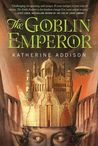 The Goblin Emperor by Katherine Addison
My rating: 3 of 5 stars
Edit to edit(2019)....This book has grown on me since I read it in 2015. It is more correctly described as a solid 4-star book. The original review follows:
---------
3 stars in my book was a book that I enjoyed reading, but would not want to read again. A more true rating would be 3.5 stars as I would not mind reading it again at some point in the future.
The first half of the story really dragged. Maia, a forgotten and banished son, is elevated to become emperor due to an unfortunate incident that took the life of his father, the emperor, and his older brothers. During the first half, Maia is not only a fish out of water, he is also a leaf upon the breeze.
It is only due to the kindness of strangers in the court that he begins to hold the reins of power. Unsteadily at first, and rarely with any sort of personal direction.
Such a situation is far more likely to result in a government run amok as various functionaries exercise unchecked power. It is far more likely that such a weak ruler would be killed or forced to abdicate. That all of these options are tried within the book does little to relieve the sense that it would have happened sooner and with broader support in any sort of more realistic setting.
So the emphasis is on fantasy in this fantasy tale.
A prime example is Maia's decision to select Csevet at his primary aide/personal secretary upon arriving at the capital. It appears to the reader that it is only blind luck that permits Csevet's selection to result in a solid guide as Maia navigates his new existence.
As with many works of SF/F, The Goblin Emperor contains many messages/passages that one could read as political commentary on the modern world.
Many of those passages and many of the larger themes would have been far more appropriate in the late 19th century and early 20th century than they are in the early 21st century. One such theme is whether women should be educated or if education simply ruins them for their only "fit" purpose of breeding and care of children.
This is largely no longer an issue for the English speaking world. Thankfully. It remains a more significant issue outside of western civilization/culture. The inclusion of this theme does not detract from the book. It is just an odd choice, IMHO.
The larger world is of elves and goblins who can and do intermarry and interbreed with predictable questions about race and identity. However, they refer to themselves as "men". This is an odd combination.
There is apparently some form of magic, but the details are unexplored. Also, the world contains some elements of steampunk which are also largely unexplored in any real depth. Steampunk is not a favorite sub-genre of mine and so I was grateful that it existed in a state where the details did not overly intrude on the larger story.
The first half of the book focuses on a number of secondary issues such as jewelry, attire, and dancing. While these are good ways of illustrating Maia's lack of preparation to become emperor, they are not terribly interesting for any other purpose.
[warning - semi-political rant ahead]
Another minor theme that is explored is the nature of "power". Within the context of the book, those in power are in some way affiliated with the structure of royalty. Apparently, "fortunes" may rise and fall. The relationship between this rising/falling relative to society, wealth, and the government are at best tangentially explained.
While there seems to be some sort of system of trade and while factories are present, the market is not presented as being free. Nor is it presented as "un-free".
Within those constraints, there is an exploration of a form of proto-socialism within the context of a letter to the emperor. One of the points made in that letter is that the most ardent advocates for this proto-socialism are really more concerned with seizing power from the powerful and have very little concern for the average citizen/worker. Rhetoric aside, they are more Stalinesque/Hitleresque/Mao-esque in their desire to impose their vision of "equality" and have little interest in actually improving conditions for anyone other than themselves. The lives of any who dissent are apparently regarded as disposable.
As a small "l" libertarian, my preferences run towards free market capitalism where the markets are regulated to prevent abuse of investors and workers. No sane person...to true Irishman....should want to see children laboring....and dying...in coal mines. Nor should one accept other labors that cost workers the valuable use of their limbs, senses, and rational thought.
And so the razor's edge we walk is how to balance the need regulate those abuses with the inherent progress that accompanies a free market.
The book offers some thoughts on those issues, but leaves further consideration as an exercise for the reader.
[end semi-political rant]
This is a free-standing book. It is not part of a series. For that we are mostly humbly grateful to the author. Dann's Dictum for authors remains in force.
View all my reviews
Dann's Dictum for Authors
My reading lately has slowly helped to develop the opinion that there are far too many book series being published. Authors will develop a fictional world and a cast of characters. They will then use those developments to create a series of stories.
This makes sense from an author's perspective. World building takes time. Character creation takes time. Re-using the product of those efforts means less work needed to produce each book. This process also enables an author to tell longer story arcs.
This also makes sense from a publisher perspective. One successful book in a series is usually sufficient to ensure reasonable sales of other books in the series regardless of the quality (or lack thereof) in each individual book.
This preference for serialization only places the reader at a disadvantage. Picking up book 4 of 6 (or 12, or....) means that the reader will not possess the knowledge of events in the preceding books. This forces the reader to go back to the beginning of a series whenever a later book is recommended or otherwise achieves some measure of notoriety.
If every book in the series is a superior piece of artisan effort, then the only real harm is the time spent with a series of enjoyable books. However, the more books in the series fail to favorably compare with the rest of the series, the more the reader's time and money is wasted just to remain current with the series.
This leads to Dann's Dictum for Authors.
Write one good book. And then move on.
Do not offer a series unless you have the capacity to have every installment achieve the same high level of reader satisfaction.
This Dictum does not preclude telling multiple stories in one fictional universe. Dragonlance was home to a great many good stories and several good series. However they were usually crafted so that one need not be overly familiar with other books/series from that fictional world. The Star Wars universe would be another decent example.
Authors, I entreat. I beg. I appear. I conjure. I implore. I plead. I supplicate.
Please write the best book you can. And then move on. Do not undertake a series unless every installment can be superlative. Just as a short fiction author who lacks the ability to write books should avoid doing so, an accomplished book-length author that lacks the ability to craft a series should avoid that monumental task as well.
This makes sense from an author's perspective. World building takes time. Character creation takes time. Re-using the product of those efforts means less work needed to produce each book. This process also enables an author to tell longer story arcs.
This also makes sense from a publisher perspective. One successful book in a series is usually sufficient to ensure reasonable sales of other books in the series regardless of the quality (or lack thereof) in each individual book.
This preference for serialization only places the reader at a disadvantage. Picking up book 4 of 6 (or 12, or....) means that the reader will not possess the knowledge of events in the preceding books. This forces the reader to go back to the beginning of a series whenever a later book is recommended or otherwise achieves some measure of notoriety.
If every book in the series is a superior piece of artisan effort, then the only real harm is the time spent with a series of enjoyable books. However, the more books in the series fail to favorably compare with the rest of the series, the more the reader's time and money is wasted just to remain current with the series.
This leads to Dann's Dictum for Authors.
Write one good book. And then move on.
Do not offer a series unless you have the capacity to have every installment achieve the same high level of reader satisfaction.
This Dictum does not preclude telling multiple stories in one fictional universe. Dragonlance was home to a great many good stories and several good series. However they were usually crafted so that one need not be overly familiar with other books/series from that fictional world. The Star Wars universe would be another decent example.
Authors, I entreat. I beg. I appear. I conjure. I implore. I plead. I supplicate.
Please write the best book you can. And then move on. Do not undertake a series unless every installment can be superlative. Just as a short fiction author who lacks the ability to write books should avoid doing so, an accomplished book-length author that lacks the ability to craft a series should avoid that monumental task as well.
Subscribe to:
Posts (Atom)